Service 02
Behavioral Audits & Nudge Design
Nudge design makes the right choice the easy choice. We audit your messages, processes and digital prompts, then redesign them so people follow through, using proven behavioral tools like EAST and human-centered design.
At a glance
- What it is
- We design simple, step-by-step roadmaps to guide people toward the right choice.
- How we do it
- Using proven tools (like making things Easy, Attractive, Social, and Timely), we redesign your messaging, processes, incentives, or digital prompts.
- The client value
- You get practical, ready-to-launch solutions that make the desired behavior the easiest and most natural choice for your audience.
Why nudge design works
People rarely make choices in a vacuum. They decide in busy clinics, on small phone screens, at the end of long days, with family and neighbors watching. Small details in that context shape what happens next.
Nudge design works with those details instead of against them. Rather than asking people to try harder, it makes the right step simpler, clearer and better timed.
Because nudges are often low-cost changes to things you already run, such as forms, scripts, reminders or defaults, they can be some of the most cost-effective improvements a program makes.
Start with a behavioral audit
Good nudge design starts with a careful look at what exists today. In a behavioral audit we:
- Walk the journey step by step, as your audience would, and note every point of friction.
- Read every touchpoint: messages, forms, signage, scripts and digital screens.
- Listen to users and frontline staff about where people hesitate, forget or give up.
- Prioritize the moments where a small change could make the biggest difference.
The audit gives you a clear, ranked list of opportunities, and it often reveals quick wins you can fix straight away.
Nudge design with the EAST framework
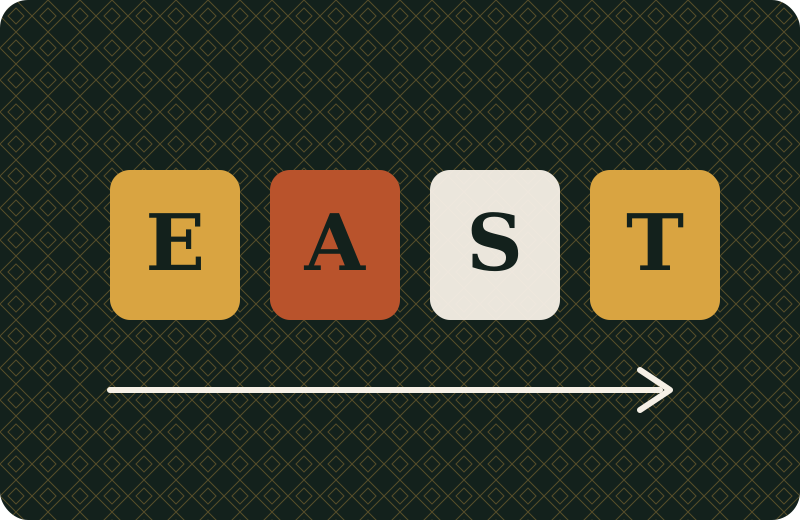
Using proven tools, like making things Easy, Attractive, Social, and Timely, we redesign your messaging, processes, incentives, or digital prompts. The EAST framework from the Behavioural Insights Team is our starting point:
Easy
Remove steps, simplify language, use helpful defaults and reduce the effort it takes to act.
Attractive
Make the behavior stand out and feel rewarding, with clear benefits and messengers people trust.
Social
Show that others like them are doing it, and make it easy to commit with friends, family or groups.
Timely
Reach people at the moment they are most open to change, and help them plan for obstacles.
We combine EAST with human-centered design, so every idea is shaped and tested with the people it is meant for.
What you get
You get practical, ready-to-launch solutions that make the desired behavior the easiest and most natural choice for your audience. Typical outputs include:
- A behavioral audit report with ranked opportunities
- A step-by-step behavior roadmap for each priority action
- Redesigned messages, scripts, forms or digital prompts
- Prototype nudges tested with real users
- A simple plan to pilot and measure the changes
How a nudge design project runs
- 01
Define the behavior
We agree the exact action you want people to take, and when.
- 02
Audit the journey
We map the current experience and find the friction points.
- 03
Generate ideas
We brainstorm options using EAST and other behavioral levers.
- 04
Prototype and test
We test the best ideas quickly with users and refine them.
- 05
Launch and learn
We support rollout and set up measurement so you know what worked.
These steps sit inside our wider SBCC methodology, and connect directly to SBCC monitoring and evaluation so results are measured, not assumed.
Common mistakes we help you avoid
Behavioral ideas are easy to copy and easy to get wrong. These are the pitfalls we see most often:
- Copying a nudge from another country. A reminder that worked in one setting may fall flat in another. Context decides what works.
- Fixing the message when the process is the problem. No poster can make up for a form that is too long or a clinic that is closed when people can come.
- Adding more information. More text rarely helps. Clear, short, well-timed prompts usually do.
- Skipping the test. Ideas that look obvious on a whiteboard often surprise you in the field. A quick pilot saves money.
- Forgetting frontline staff. Nurses, agents, extension officers and call-center teams are part of the choice environment too.
We build checks for each of these into our work, so the changes you launch are grounded in your audience's real experience and ready to measure.
Where nudge design helps
We bring nudge design to public health, agriculture, WASH, financial inclusion, gender and climate programs, and to businesses that want more people to adopt a product or service.
Common examples include appointment and refill reminders, simpler sign-up flows, savings prompts, better-placed handwashing cues and clearer instructions at service points. As a behavioral insights consultancy in Africa working worldwide, we adapt every idea to local language, culture and context.
Want to see where your process loses people? Ask us about a behavioral audit.
FAQ
Frequently asked questions
What is nudge design?
Nudge design is the practice of changing how a choice is presented so the desired behavior becomes easier and more natural, without removing options or relying on heavy incentives. Examples include simpler forms, well-timed reminders, clearer defaults and messages that show what others are doing.
What is a behavioral audit?
A behavioral audit is a structured review of a process, service or communication through a behavioral lens. We walk through each step as your audience would, and flag friction, confusing language, missing prompts and weak motivation. The audit tells you exactly where nudge design will help most.
What does EAST stand for?
EAST stands for Easy, Attractive, Social and Timely. It is a practical framework published by the Behavioural Insights Team that summarizes four reliable ways to encourage a behavior. We use it as one of the main lenses in our work.
Is nudge design ethical?
It should be. Good nudge design is transparent, keeps people's choices open, and supports behaviors that are in the person's own interest or the public interest. We test ideas with the audience and avoid tactics that mislead or pressure people.
Can nudge design work for digital products?
Yes. Many of the most effective nudges are digital: onboarding screens, SMS reminders, default settings, progress bars and clearer calls to action. The same principles apply on paper, in clinics, at service desks and in the field.